The Journey
Everything started in Freiburg. From there we boarded a train north, passing through Baden-Württemberg and into Hamburg — a stop that itself feels like a city worth a day. From Hamburg the route continues northeast, crossing into Denmark and then Sweden, before arriving at Stockholm Central. Door to door, roughly 1,700 km without a single car. The train through northern Germany and Sweden moves through a flat, forested landscape that gradually becomes more coastal as you approach Stockholm — pine trees, lakes, and granite outcrops appearing between the tracks and the horizon.
Gamla Stan
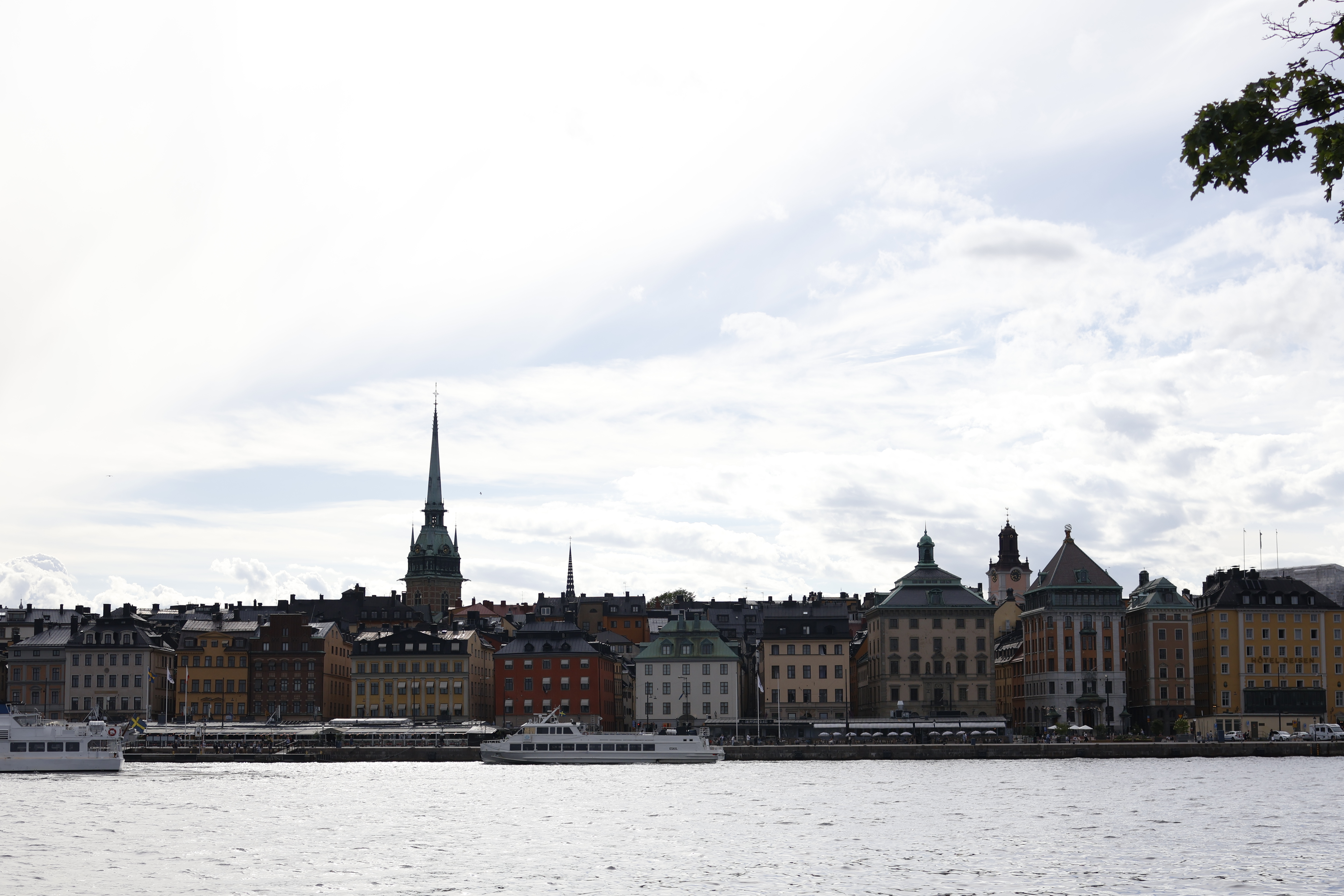
Stockholm’s old town sits on a small island at the point where Lake Mälaren meets the Baltic. From across the water the silhouette is instantly recognisable — ochre and rust-coloured facades packed tightly together, the green spire of Storkyrkan rising above the roofline. The city grew outward from this island over centuries, but the old core still holds its shape.
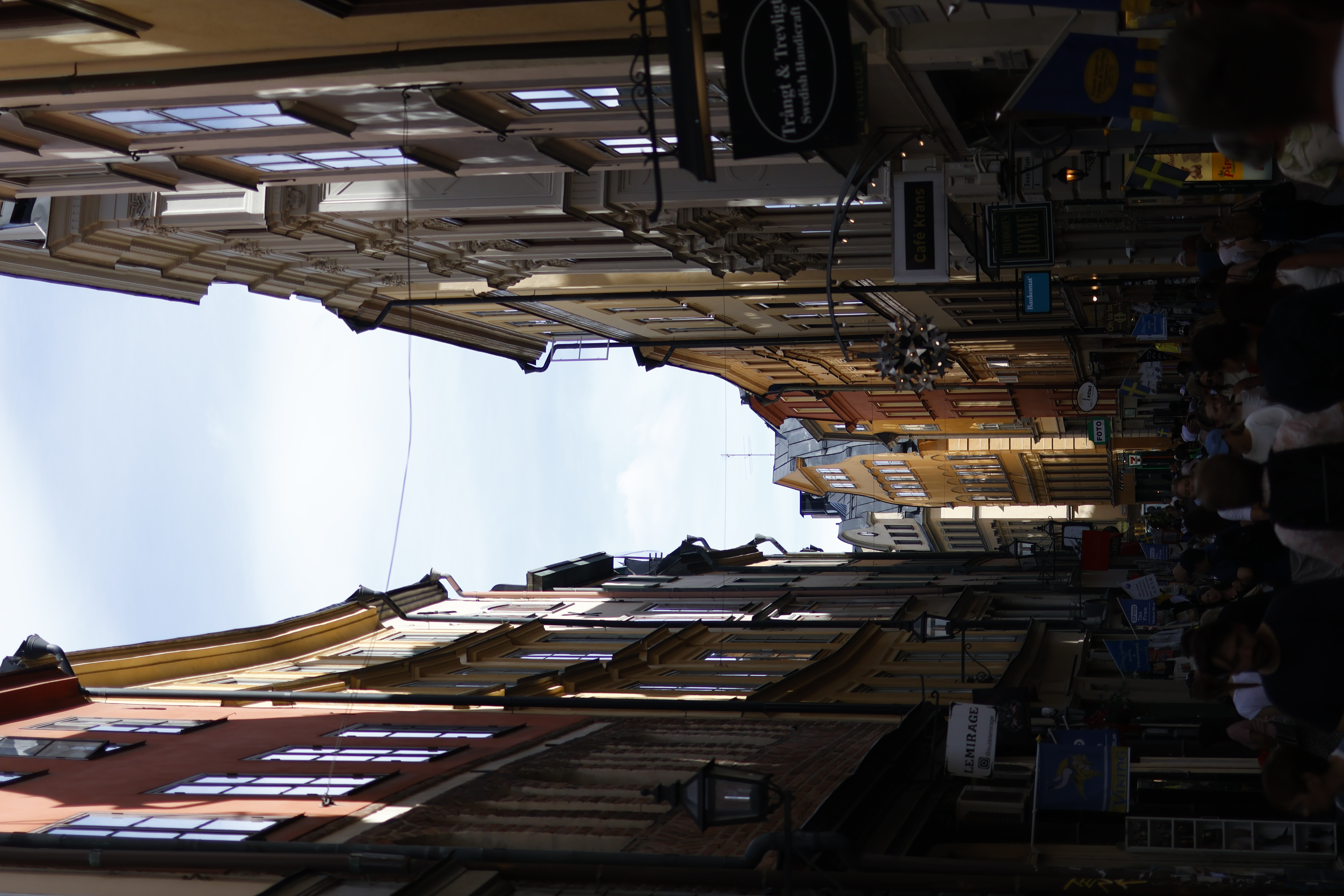
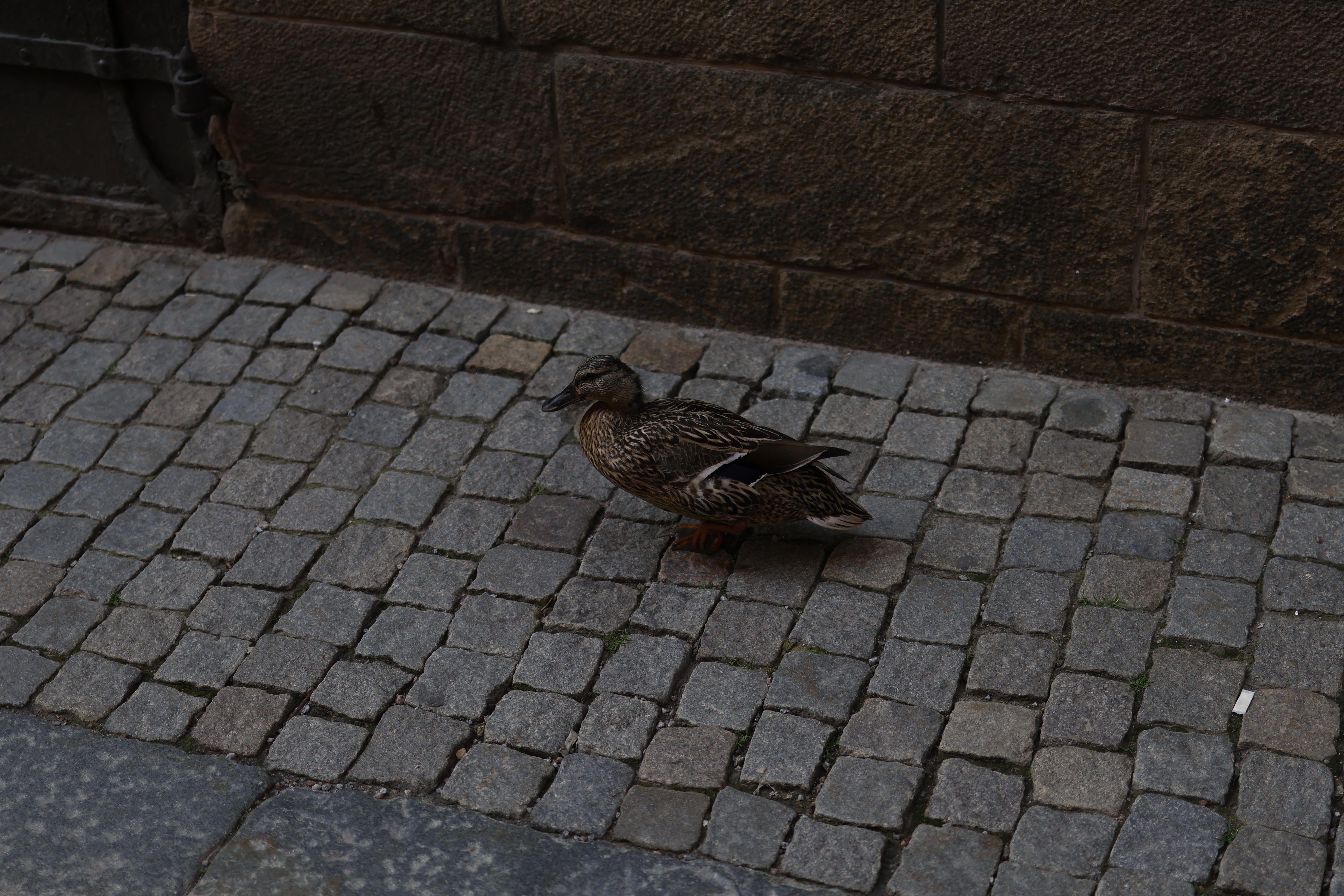
Inside the old town the streets barely qualify as streets — more like narrow slots between centuries-old buildings, wide enough for a few people abreast. The cobblestones are uneven, worn smooth by foot traffic. A mallard walking across them didn’t seem to find this unusual in the slightest.
Churches & Towers
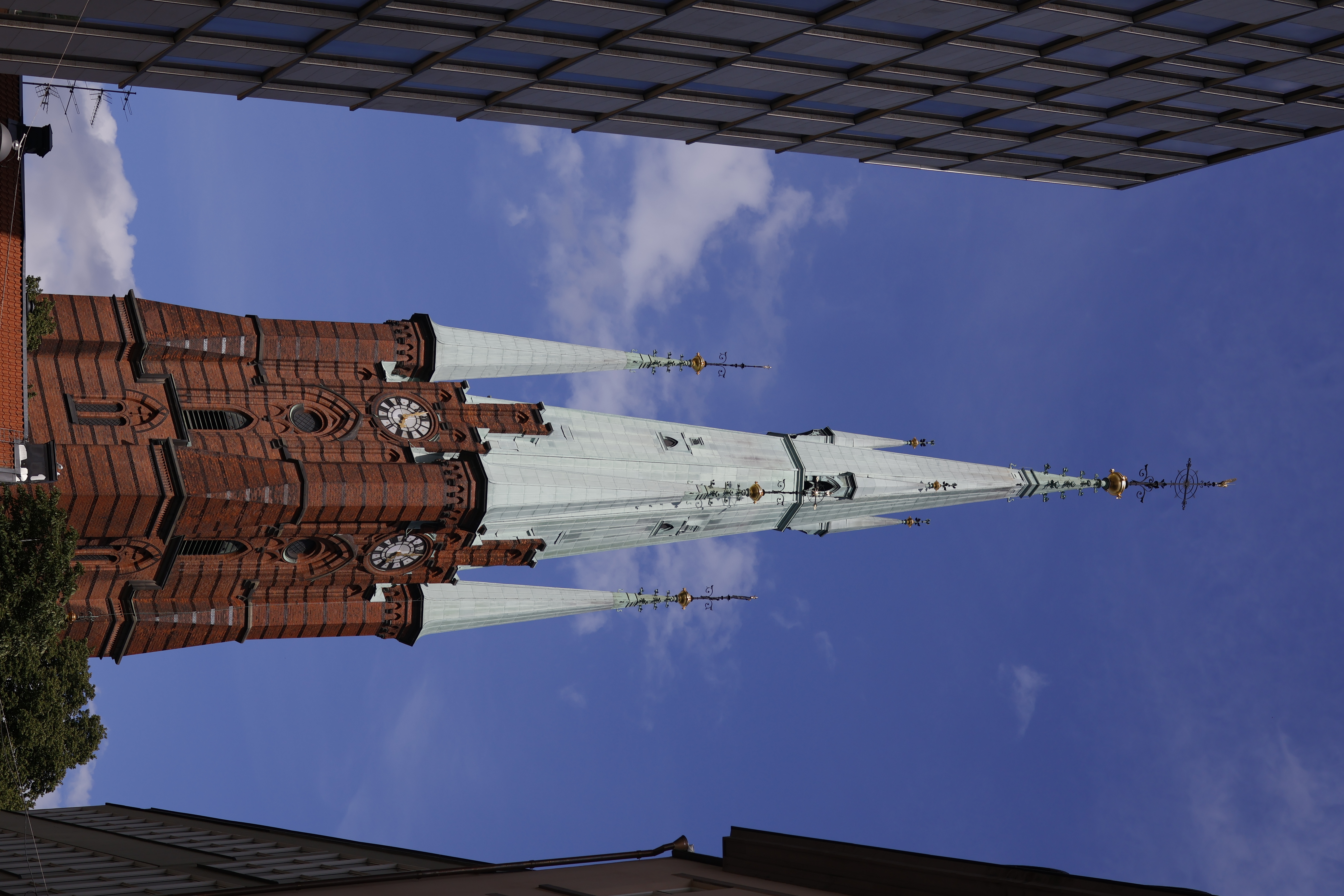
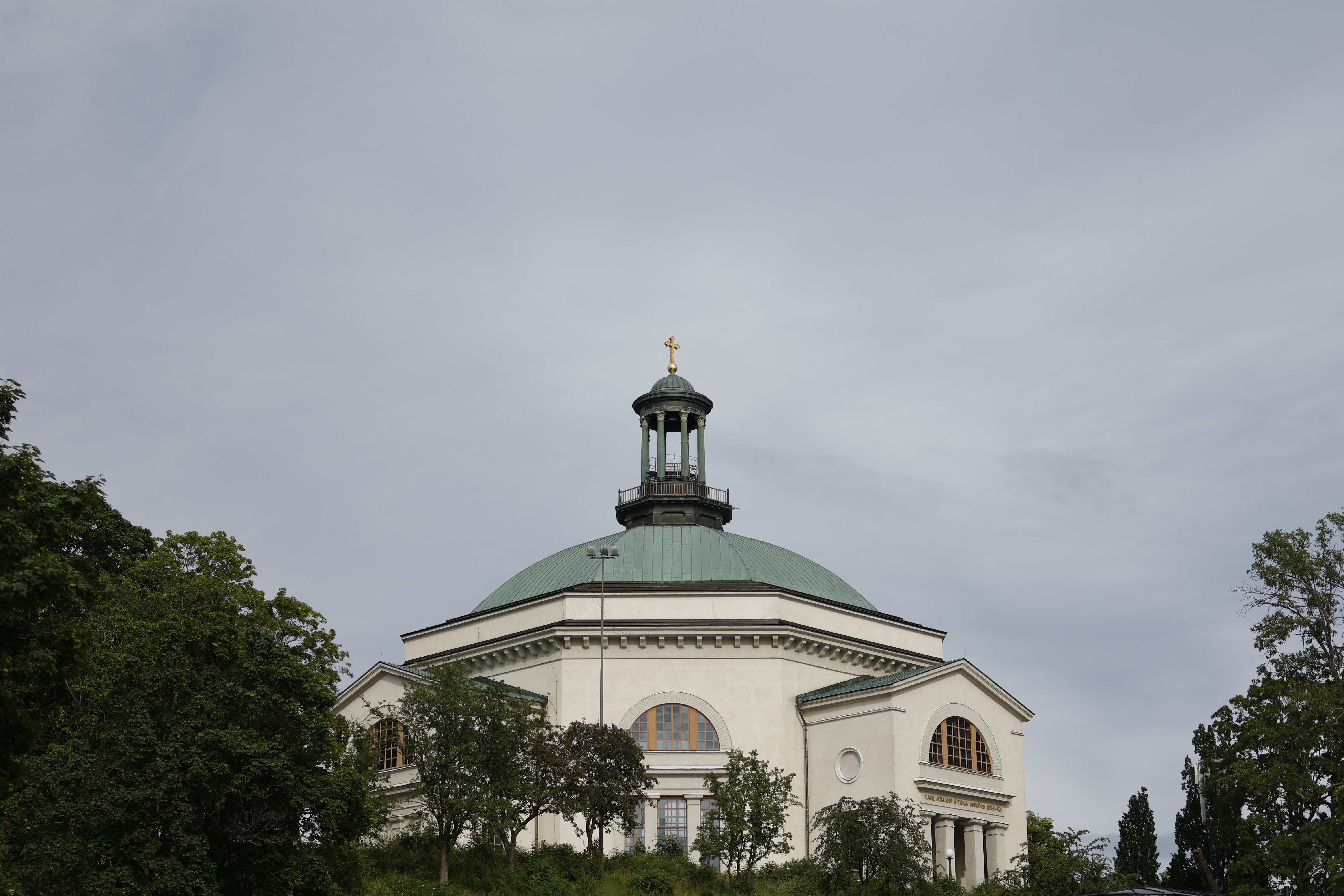
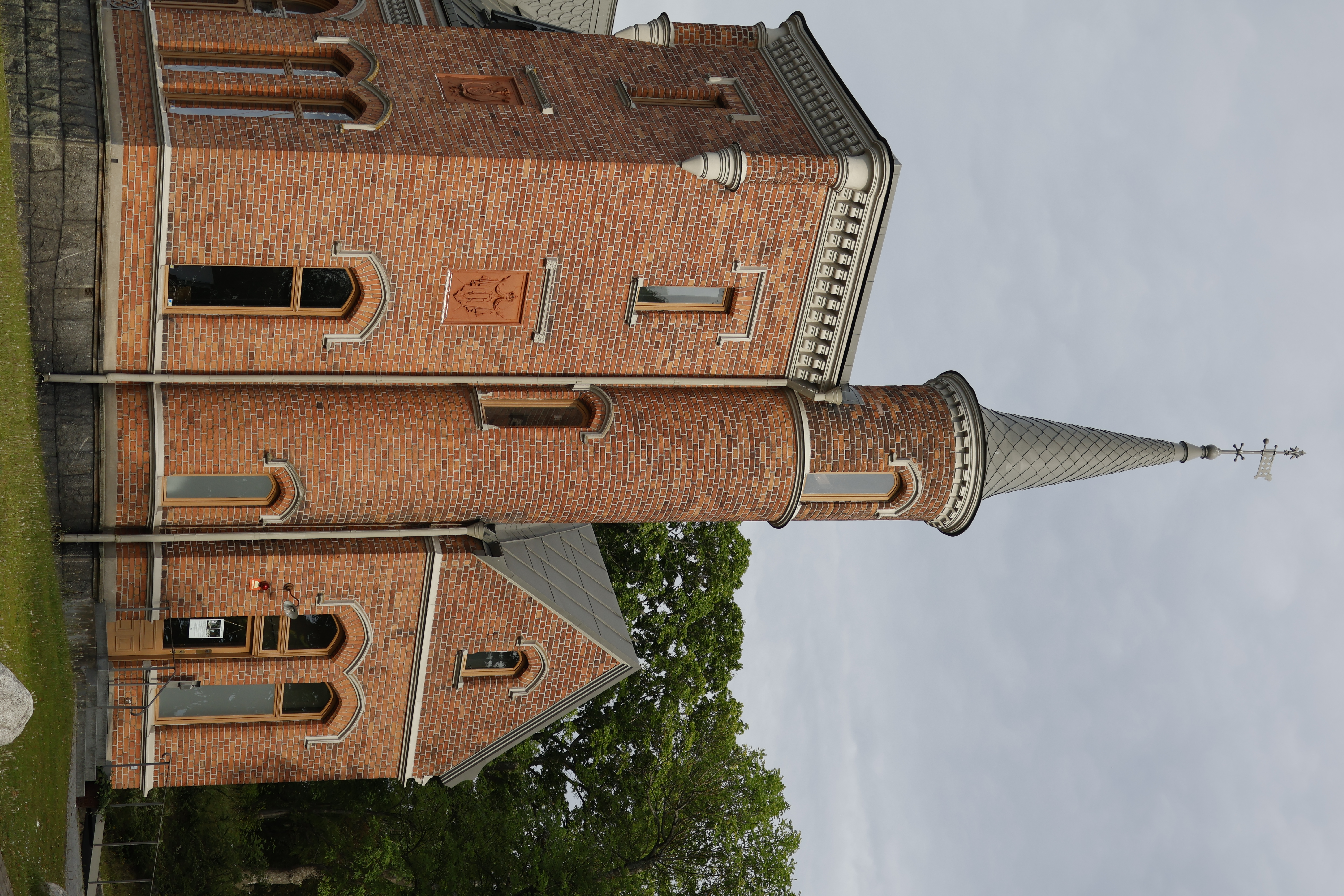
Stockholm has a dense collection of churches and they don’t all look alike. The twin white spires of Gustaf Vasa kyrka shoot straight up from a red-brick neo-Gothic base, a shape you can spot from several streets away. Further along, the green copper dome of a neoclassical rotunda church sits low and wide above a treeline, its lantern topped with a gold cross. Each one is a different interpretation of the same general idea — stone, height, permanence.
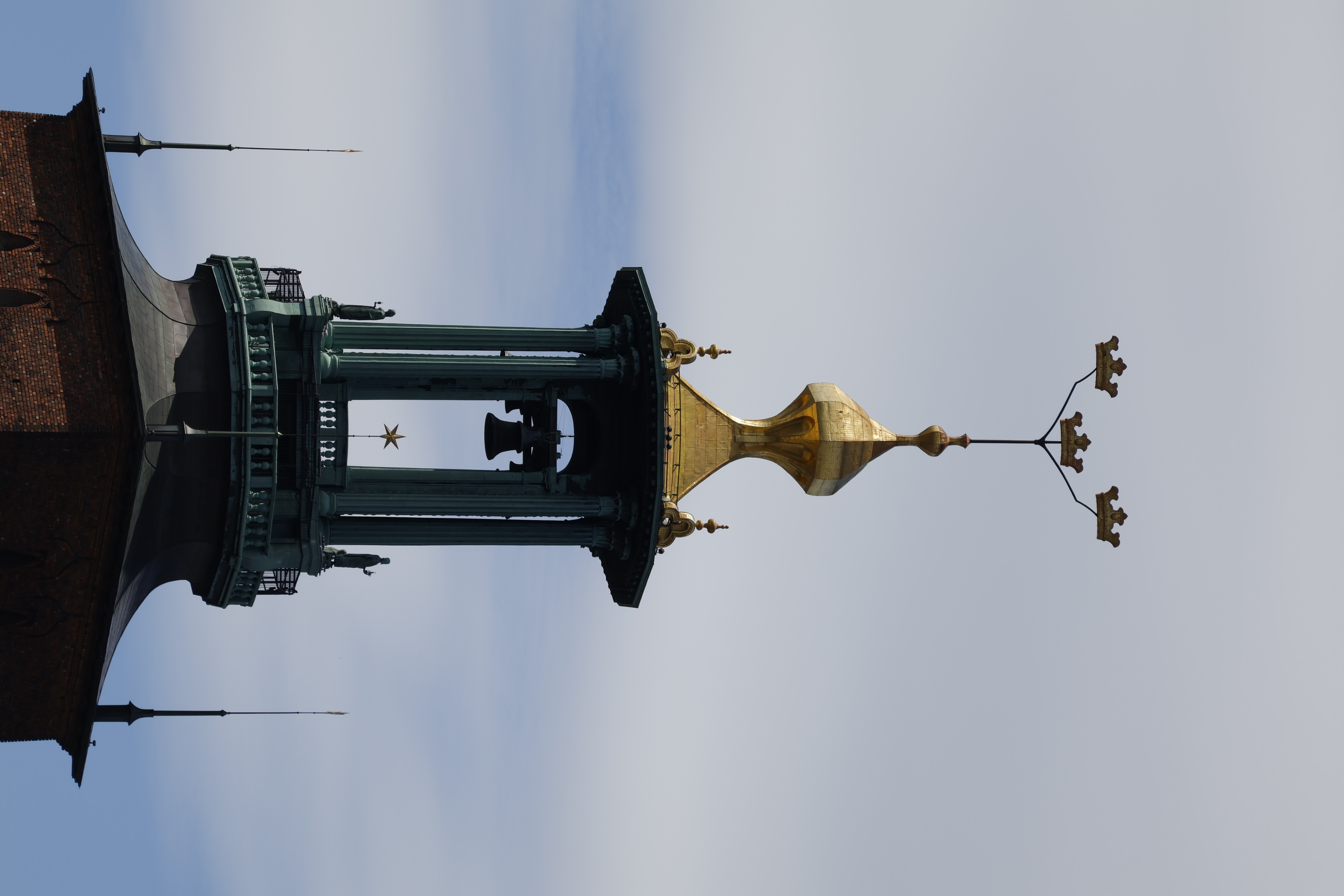
The most iconic tower in the city belongs to the Stadshuset — the City Hall. The golden Three Crowns (Tre Kronor) at the top of the tower is the symbol of Sweden itself, and seeing it up close reveals just how elaborate the metalwork is: three miniature crowns suspended on iron arms above a gilded finial, with a star hanging in the open bell chamber below. It’s a symbol that manages to be both delicate and unmistakable.
Parliament & Architecture
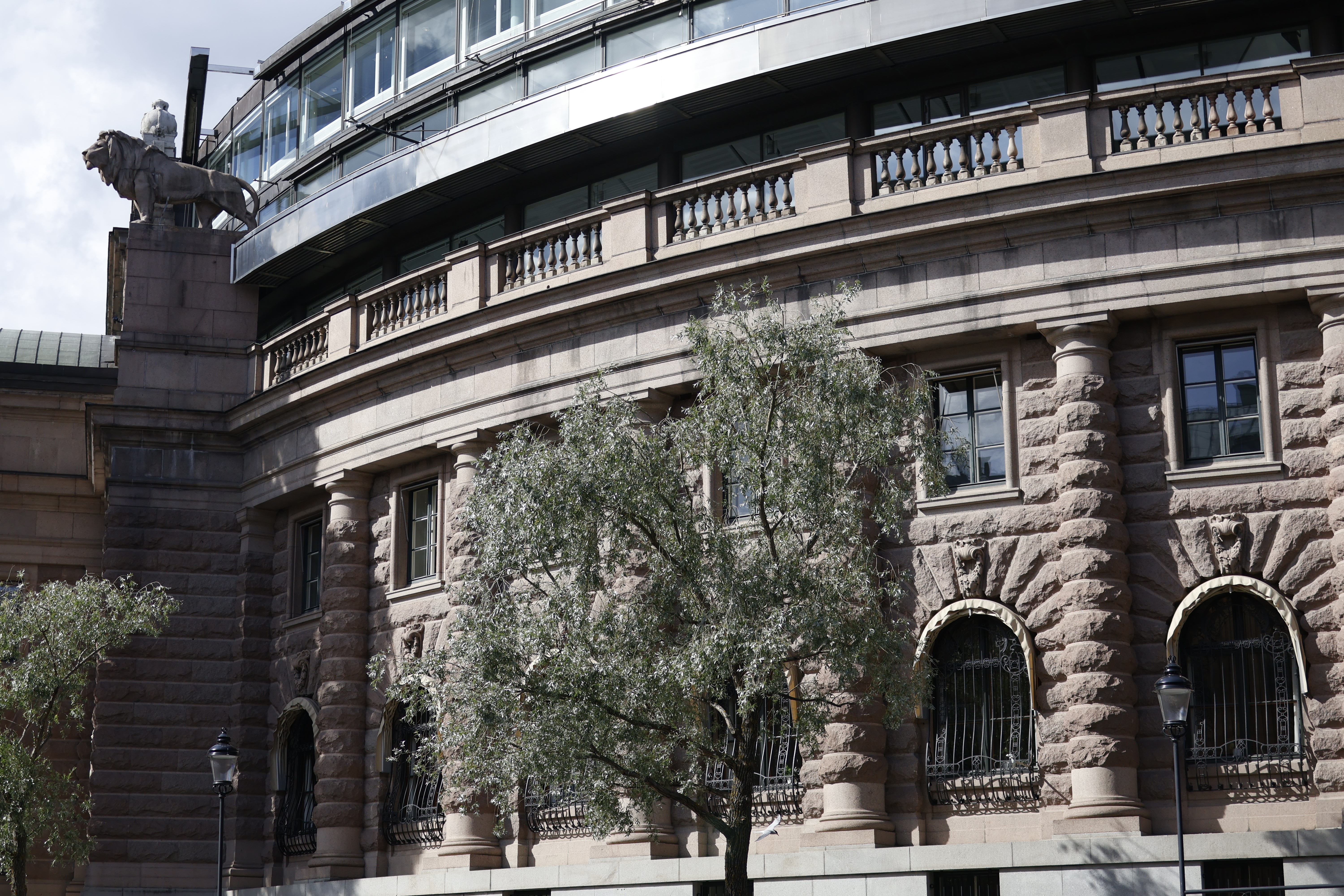
The Riksdag — the Swedish Parliament — occupies the island of Helgeandsholmen between Gamla Stan and the northern mainland. Its curved stone facade wraps around the island’s edge: columns, arched windows, and a bronze lion guarding the corner roofline. The building is severe in the way parliament buildings usually are.
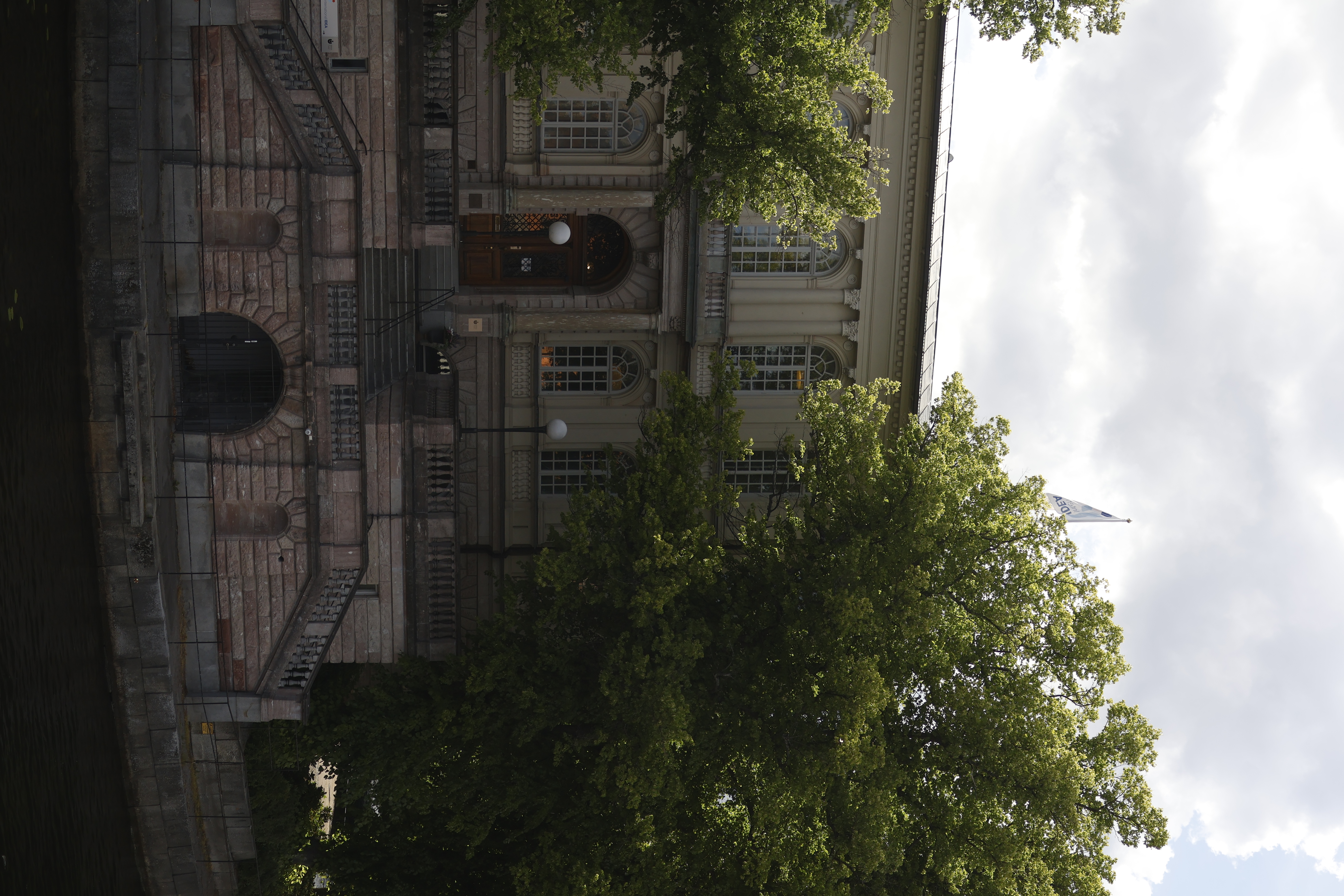
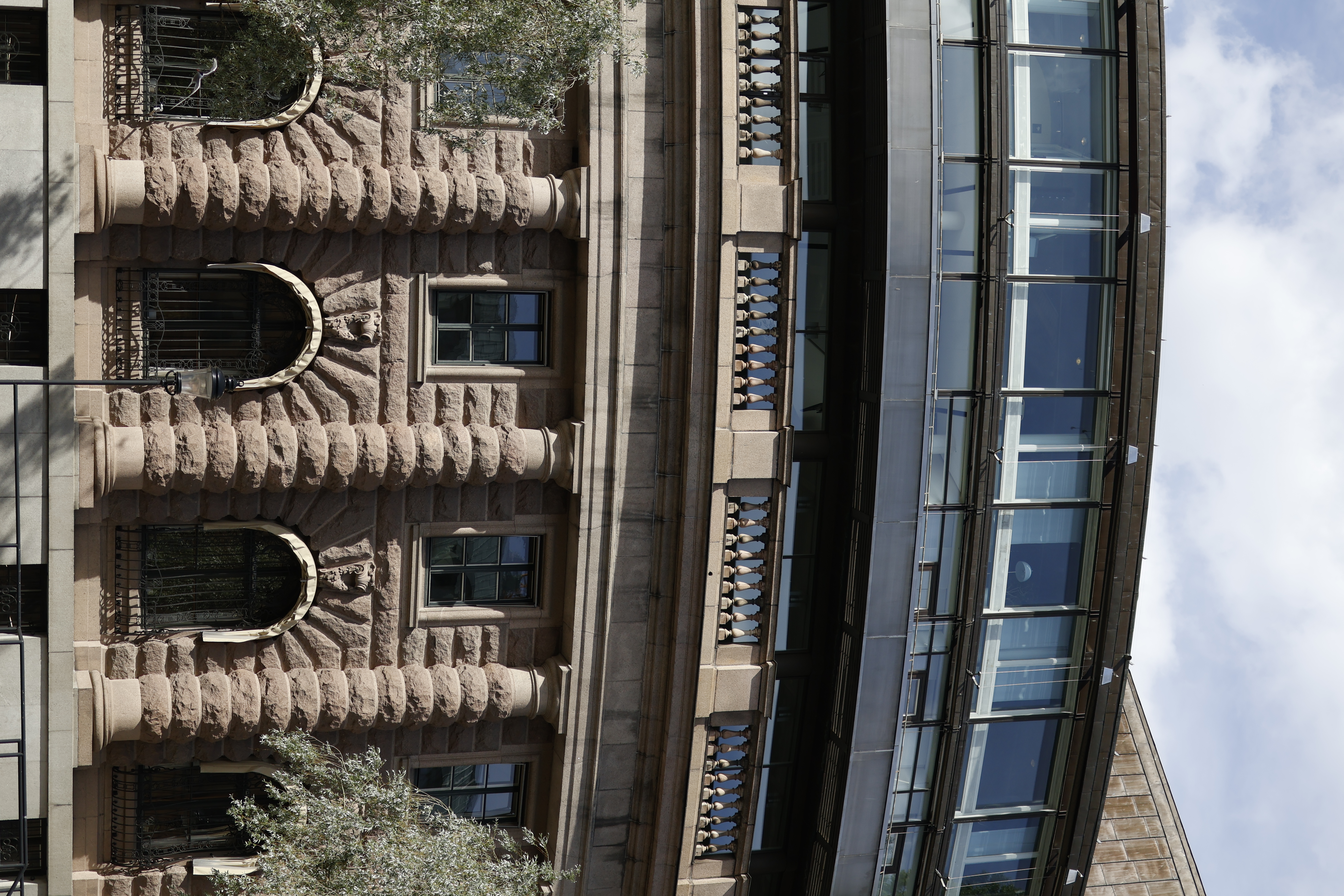
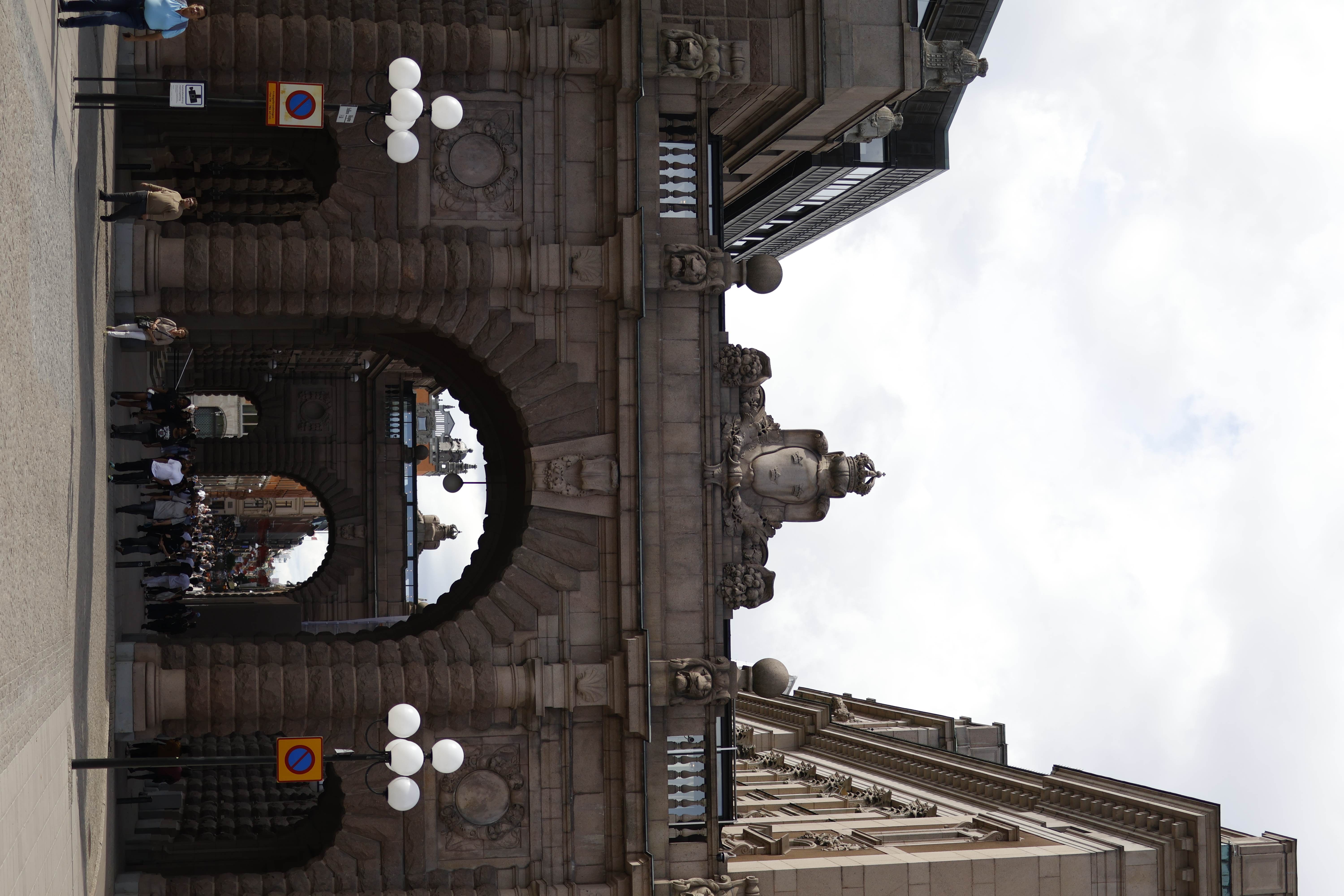
Stockholm doesn’t shy away from this kind of heavy stone architecture. Around the parliament and along the waterfront you find facades dense with carved ornament, arched entrances lit by globe lanterns, and buildings from the late nineteenth century standing directly alongside glass-and-steel additions from the twenty-first. The contrast is not subtle — old sandstone pressed right up against a curved glass curtain wall.
The Waterfront
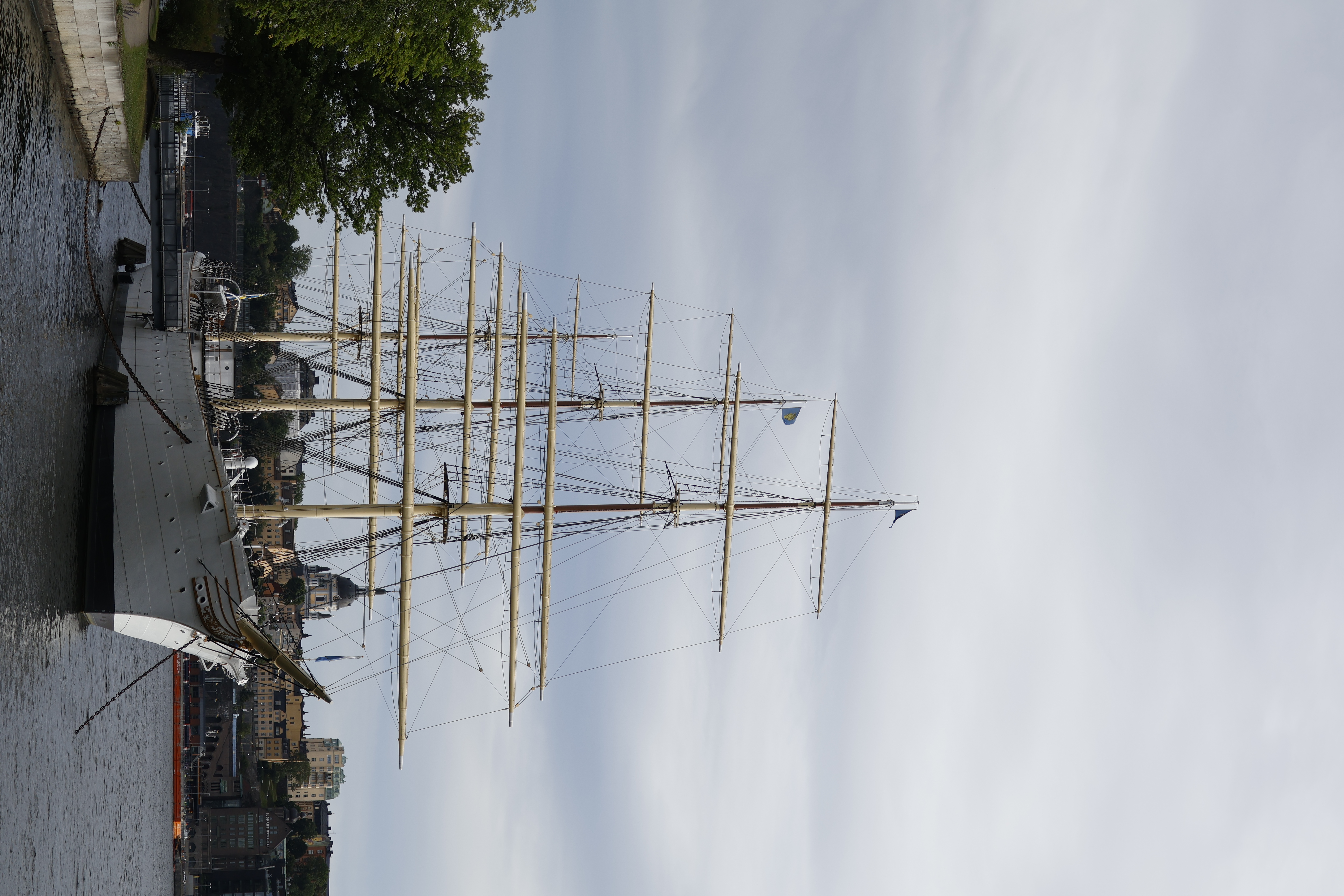
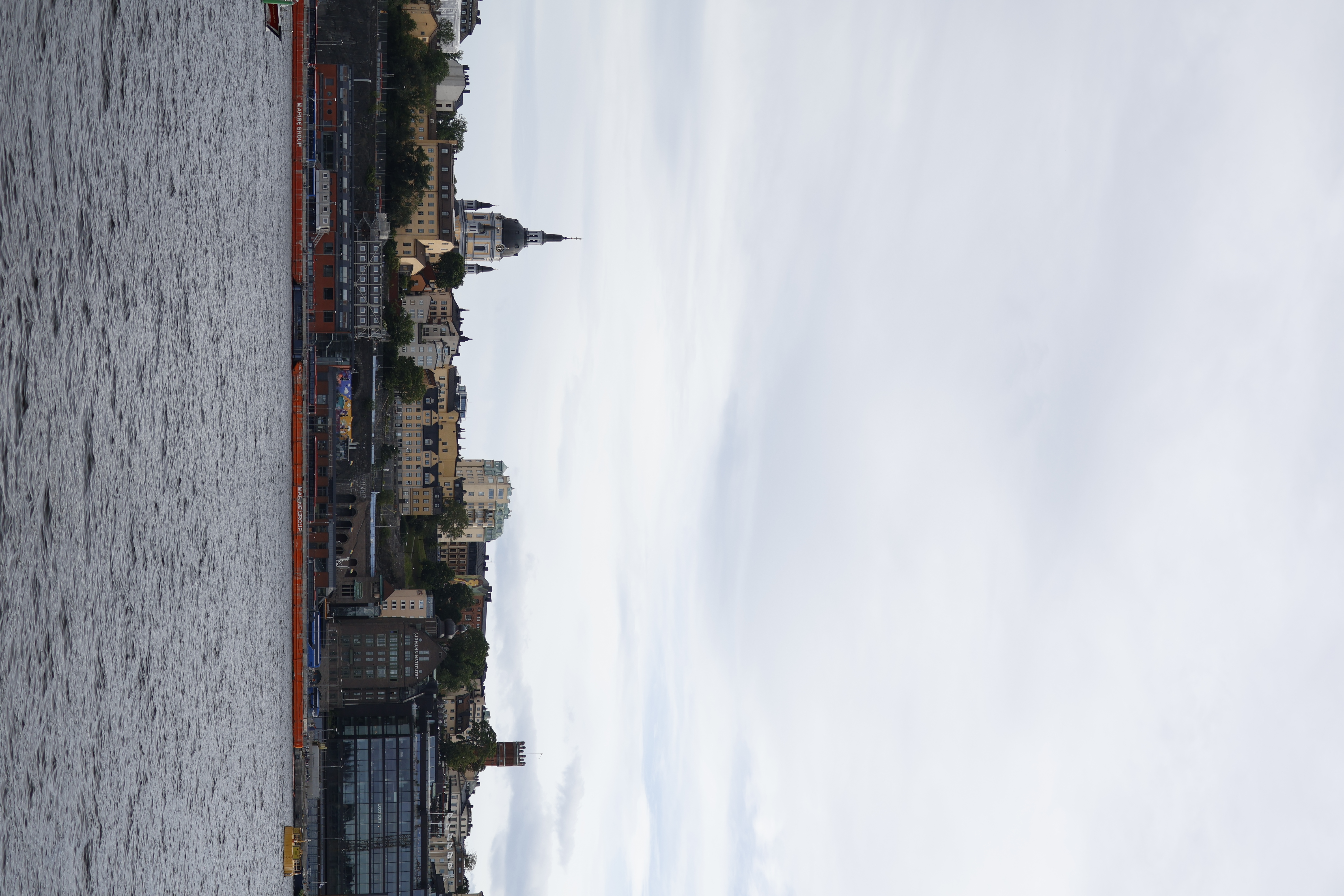
The water is everywhere. Stockholm is built across fourteen islands, and you are never more than a few minutes’ walk from a quay. Historic tall ships are moored along the Djurgården shore, their bare masts rising against a pale sky like stripped trees. Looking back from the water towards the city, the skyline mixes church spires, copper rooftops, and the occasional modern tower pushing above the rest.
Norrmalm
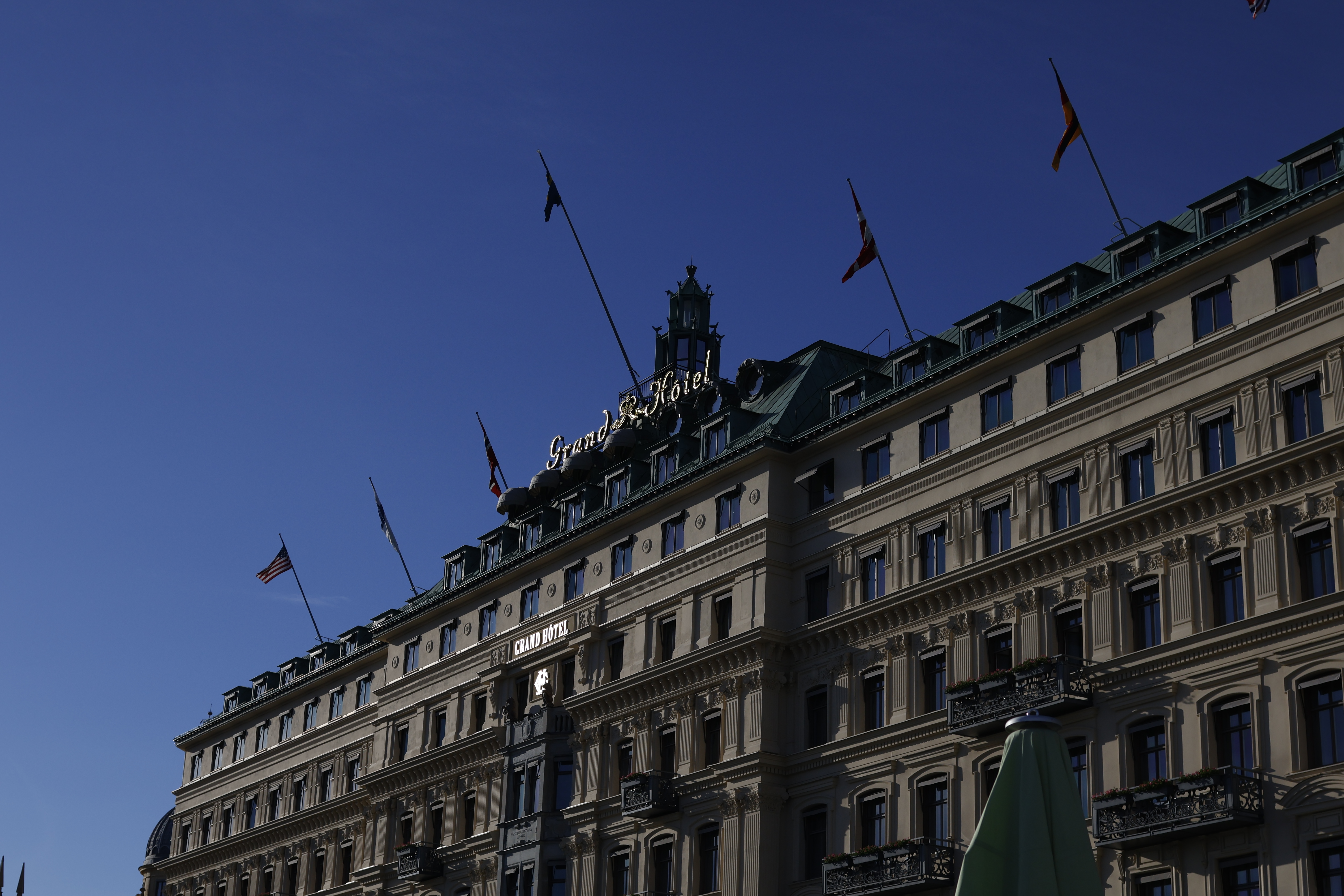
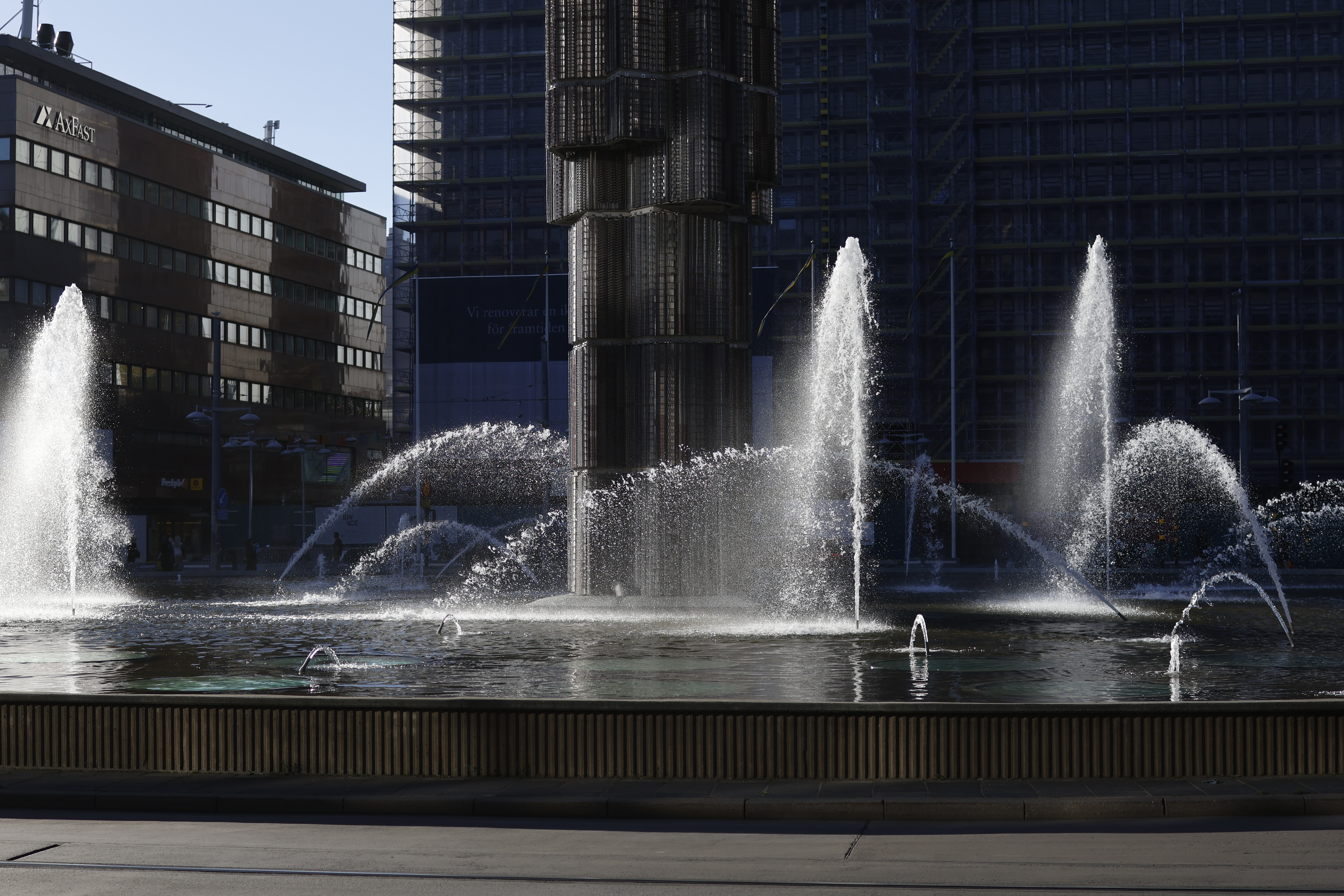
The modern centre of Stockholm feels like a different city from Gamla Stan. Sergels Torg — the main public square — is built around a circular fountain and the abstract glass obelisk that has become its landmark, surrounded by office towers and the wide concrete aprons of the 1960s and 70s. The Grand Hotel nearby provides a counterpoint: a five-storey baroque facade of pale stone, flags of many nations flying above a deep blue sky.
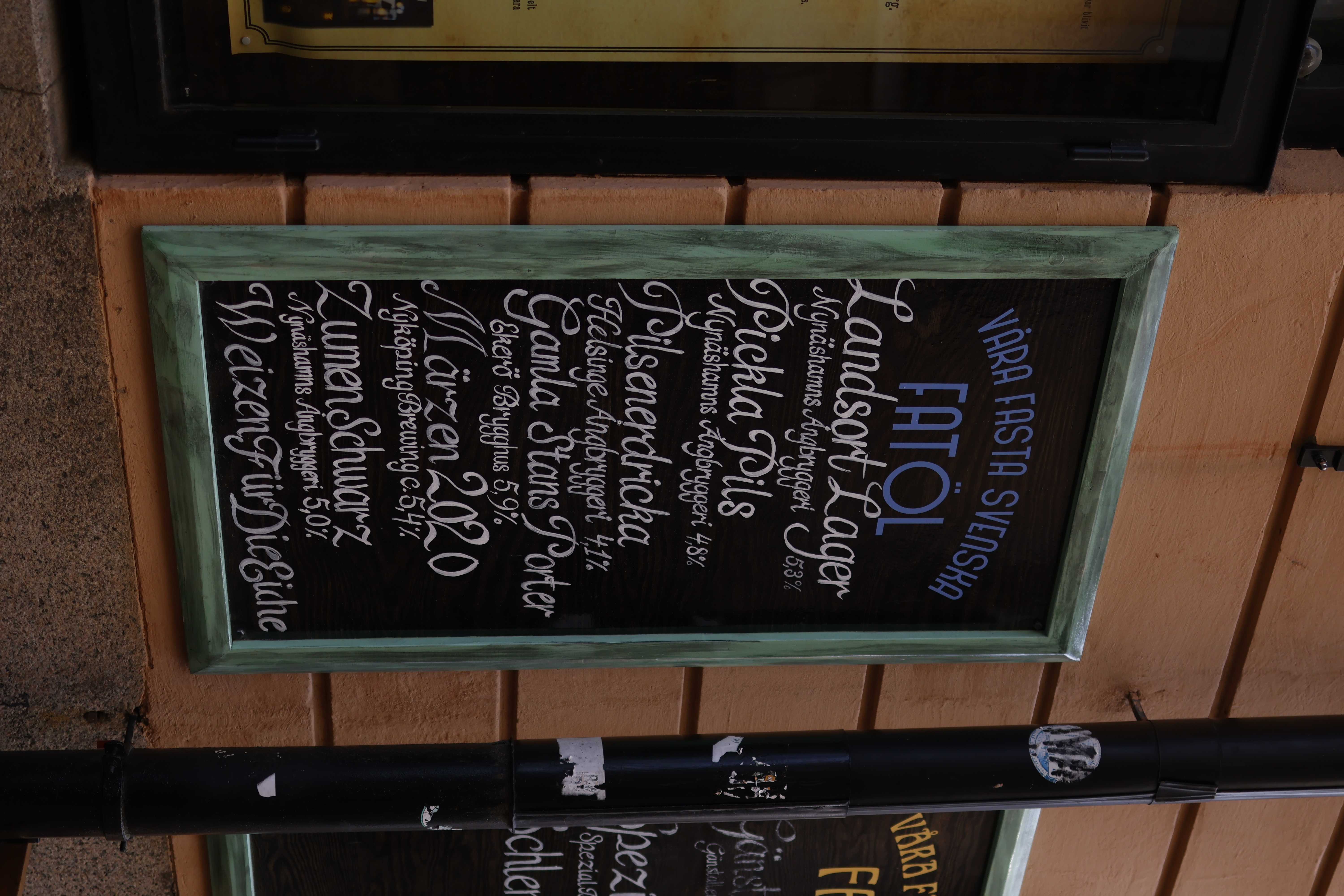
And at the end of the day, the blackboard outside a bar listing the fatöl — draft beer — in careful chalk lettering. Landort Lager. Pieria Pils. Gamla Stans Porter. In Swedish, even beer names manage to sound both practical and slightly mythological at the same time.
Total distance: ~1,700 km from Freiburg, by train via Hamburg.